Why I Built Muted Desk
I didn’t start this blog because I had it all figured out. I started it because I didn’t — and I realised most people don’t either.
When COVID hit in 2020, I found myself working from home full-time almost overnight. No commute, no office, no structure. On paper, it sounded like a welcome change. In practice, it was a slow erosion of focus, routine, and output. I was technically “at work” but I was inefficient and rarely productive for extended periods. My environment was wrong. My habits were wrong. My tools were outdated.
At the same time, AI was starting to become known as a practical tool that could handle repetitive tasks, generate content, organise information, and save hours each week. I put it off for a long time, but then I started using it. My output changed. My clarity changed. And I started wondering why more people weren’t talking about it.
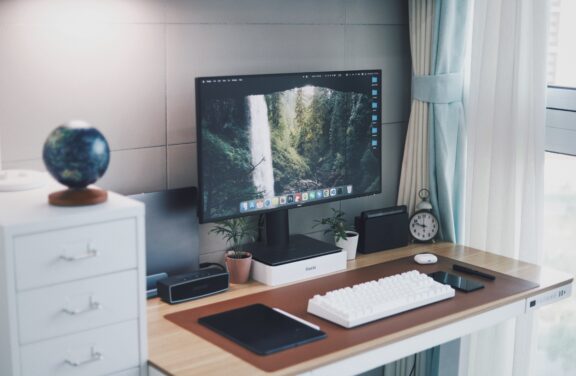
It was around this point I got a bit obsessed with my desk setup. Not in a “£500 cable management” way, just genuinely curious about what actually made a difference. The monitor position, the lighting, the chair, the gadgets. Small adjustments that made a big difference. The environment you work in shapes how you think, how long you can focus, and how much you actually enjoy the day.
That’s what the Muted Desk blog is about. A focused blog for people who want to work smarter from home, keep up with advances in technology, and build a workspace that actually supports how they think. A central hub for everything work-from-home.
The Shift Is Already Happening
Remote work is no longer an experiment. For a growing number of people, it’s just work.
Before the pandemic, just 4.7% of UK workers worked from home. That number is now dramatically higher. Today, around 40% of UK workers spend at least some of their week working remotely, made up of both fully remote and hybrid workers.
The more telling stat? 64% of remote workers say they would quit or start looking for a new job if their employer ended remote work. A further 58% say they’d be willing to change jobs or even relocate based on the flexibility on offer. This isn’t a perk anymore. For a lot of people, it’s a non-negotiable.
But the numbers don’t tell the full story. The shift has also exposed a real problem: most of us were never equipped to work this way. Working well from home isn’t automatic. It’s a skill, and one worth building deliberately.
AI Is Not Optional Anymore
I want to be straight about this. AI is not longer something you can afford to sit out.
The numbers speak for themselves. Around 78% of organisations reported using AI in 2024, up from 55% the year before. Three quarters of workers were already using AI at work in 2024, and nearly half of those had only started within the previous six months. That’s not a gradual adoption curve. That’s a sprint.
The productivity gains are real. Among workers who used AI tools daily, over a third reported saving four or more hours every single week. That’s half a working day handed back to you.
This isn’t about job replacement. It’s about what happens when the person at the next metaphorical desk starts using AI to do in two hours what takes you six. The gap between people who adopt these tools and those who don’t is growing fast.
The barrier to entry is low. You don’t need to be a developer or anything close to it. Some of the most useful AI tools out there are built for regular people: writers, managers, freelancers, consultants. Tools that help you draft faster, research smarter, and cut out the tasks that eat your time without adding anything back.
What most people lack isn’t access. It’s knowing which tools are actually worth using, how to fit them into an existing workflow, and how to use them without losing your own judgment in the process. That’s where the real value is, and it’s something I’ll cover in this blog in a practical, no-nonsense way.
Your Environment Is Shaping Your Output
This part tends to get overlooked, but it’s just as important. Where you work matters as much as how you work.
Your physical environment directly affects your ability to focus, make decisions, and maintain energy across a full working day. Clutter increases mental load. Poor lighting affects mood and alertness. A chair that hurts your back at 2pm is a productivity problem, not just a comfort issue.
Beyond the functional side, there’s something more subtle going on. The feel of your workspace affects how you feel about showing up to it. A space that’s intentional, clean, considered, and yours creates a different headspace than one that feels temporary or thrown together.
This is why workspace design isn’t just an aesthetic hobby. It’s part of how you perform. The right setup isn’t a luxury. It’s a necessity.
I’ll be covering this properly in the blog: what actually makes a difference, what’s worth spending money on, and how to build a setup that works visually and practically, whatever your budget or available space. All while remaining incredibly aesthetic. The work from home desk setup guide is a good place to start.
Who This Blog Is For
Muted Desk is for people who take how they work seriously.
Not in an obsessive way. In a quiet, deliberate way. People who want to be effective without burning out. People who are curious about AI but want useful, grounded takes rather than hype. People who care that their desk looks good and their workflow runs smoothly.
The topics I’ll cover:
- Workspace Design – because where you work shapes how you work. Desks, lighting, gear, and the small details that make a space feel like yours
- Productivity Tips – not the “wake up at 5am” kind. Practical systems and habits that actually stick
- AI & Automation – honest takes on what’s worth your time, what’s overhyped, and how to make these tools work for you
- Tools & Tech – apps, hardware, and workflows worth knowing about
- Digital Nomad – the reality of working from anywhere: the good, the unglamorous, and everything in between
- Lifestyle – from how to make the best coffee at home to stress management essentials
One Last Thing
If any part of this resonated, whether that’s the frustration with unfocused remote days, the curiosity about AI, or the desire for a workspace that doesn’t feel like an afterthought, then this blog is for you! Bookmark this site if you want to stay up to date.
New posts will be going up regularly and I’m looking forward to building the community!